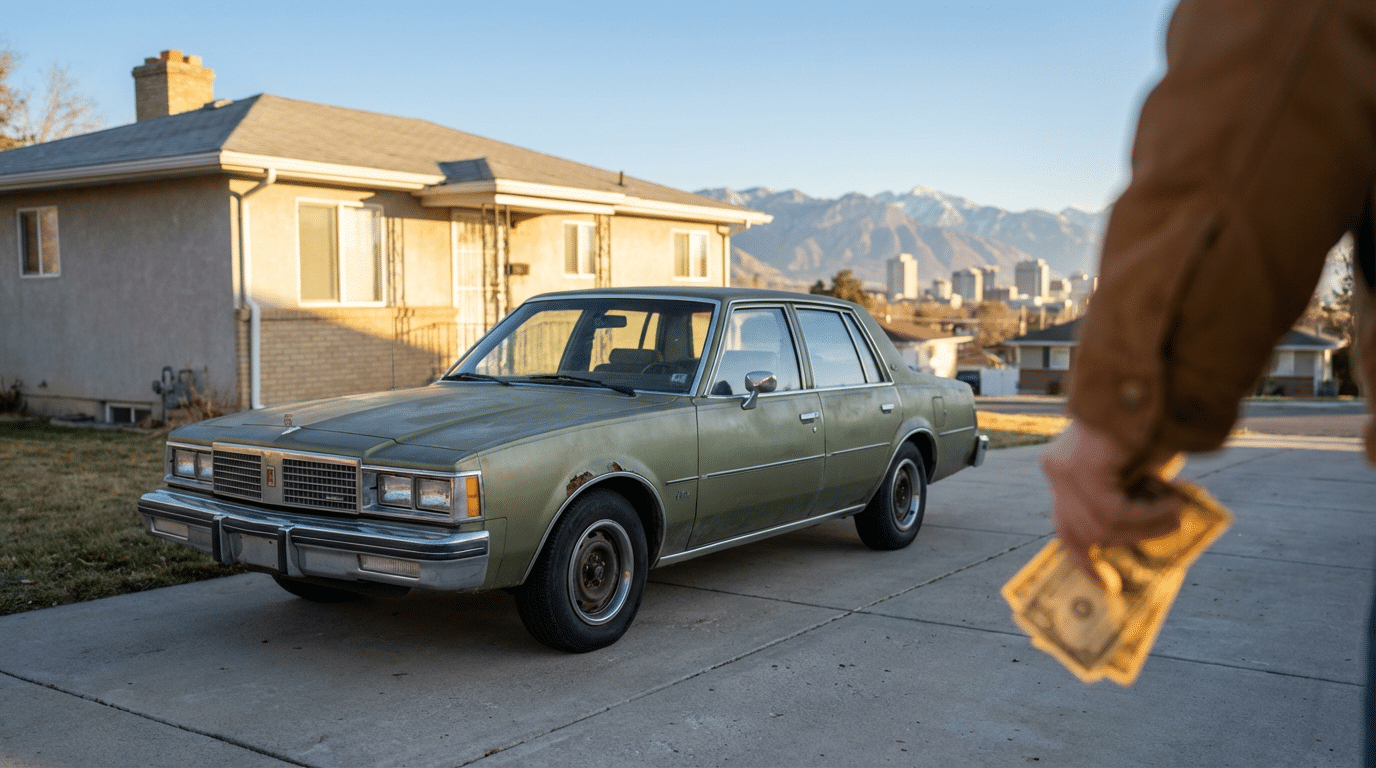
When a commercial truck is involved in an accident, deciding whether to repair it or sell it can be a complex choice, especially for fleet managers who need to minimize downtime and control costs. A totaled commercial truck isn't just a vehicle; it's a critical asset whose status directly impacts your bottom line. We guide you through the financial and operational implications of each option.
Quick Answer
Determining whether to repair or sell a totaled commercial truck hinges on the truck's Actual Cash Value (ACV) relative to repair costs, potential diminished value, and operational needs. Selling offers immediate cash, avoids repair complexities, and frees up valuable space, whereas repairing may incur unexpected expenses and significant downtime. Evaluate total costs, future value, and fleet strategy to make an informed decision.
Table of Contents
- Understanding What 'Totaled' Means for Commercial Trucks
- The Real Cost of Repairing a Totaled Commercial Truck
- Exploring the Option of Selling Your Totaled Commercial Truck
- Making the Right Decision: Repair vs. Sell Analysis for Fleet Managers
- Insurance, Legal, and Operational Considerations
- Frequently Asked Questions About Totaled Commercial Trucks
Understanding What 'Totaled' Means for Commercial Trucks
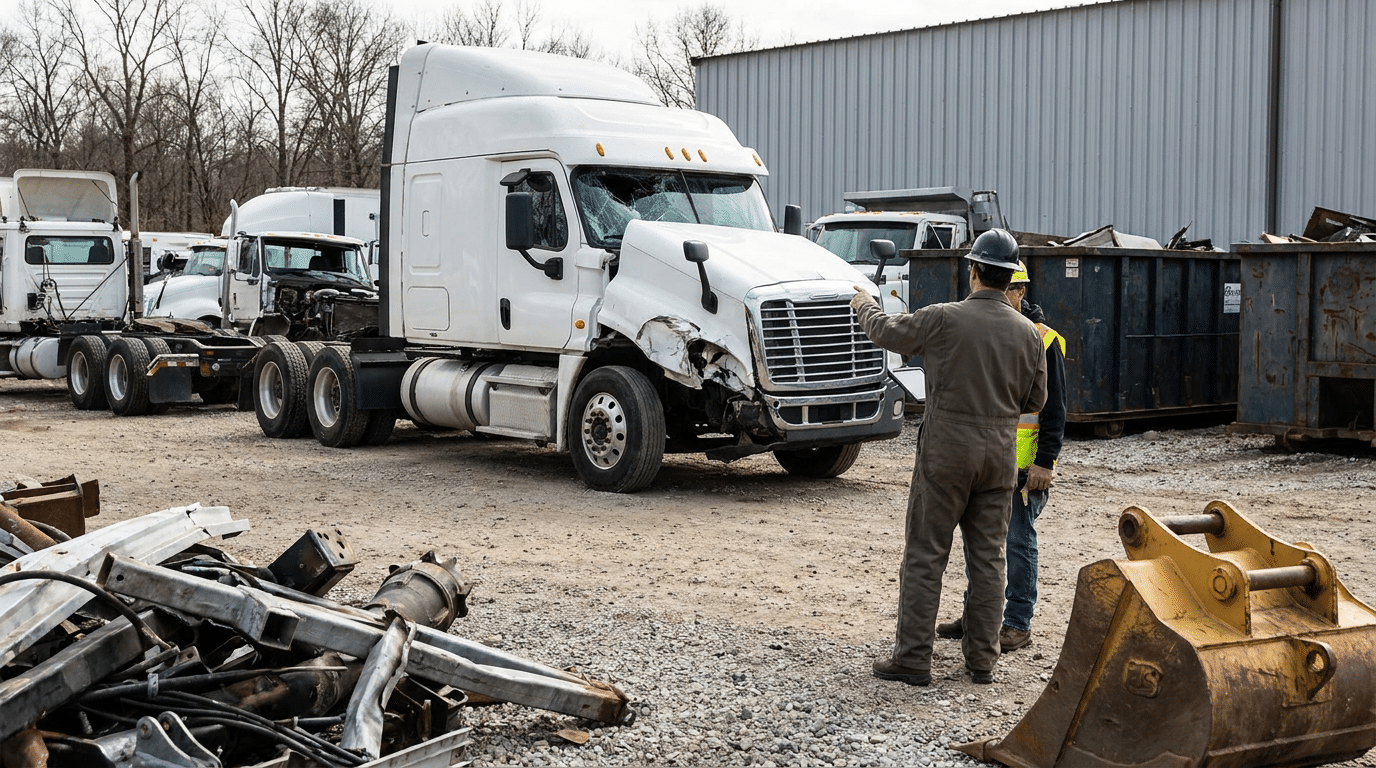
A "totaled" commercial truck means its repair costs exceed its value, making it uneconomical to fix. This designation is critical for fleet managers because it dictates insurance payouts and future operational decisions. Understanding this status is the first step toward effective asset management.
Pro Tip: Even if your commercial truck isn't officially deemed 'totaled' by an insurance company, independent assessments might reveal that its repair costs far outweigh its operational value to your fleet. Always get multiple opinions.
Criteria for a Commercial Truck Total Loss
An insurance company declares a commercial truck a total loss when the cost to repair the damage, plus the salvage value of the vehicle, equals or exceeds its Actual Cash Value (ACV). This threshold varies by insurer and state regulations, but typically hovers around 70-80% of the ACV. For instance, if a truck's ACV is $50,000 and the repair estimate is $40,000 (80% threshold), it's likely totaled.
Factors like extensive frame damage, engine compartment trauma, or structural cab issues almost always push a commercial truck into the total loss category. Many fleet managers find themselves grappling with this decision, much like the homeowner who told us, "Junk Car was very helpful when my car cost more than it was worth to fix." This sentiment applies even more strongly to commercial vehicles, where repair complexity and parts availability exacerbate the problem.
The Role of Actual Cash Value (ACV) and Salvage Value
Actual Cash Value (ACV) represents the market value of your commercial truck just prior to the accident, factoring in depreciation, mileage, and condition. This is the amount your insurer typically pays for a totaled vehicle, minus your deductible. For example, a 2018 Freightliner Cascadia with 300,000 miles will have a significantly lower ACV than a newer model with fewer miles, even if both sustain similar damage.
Salvage value is the amount an insurer expects to recoup by selling the damaged vehicle for parts or scrap. If you retain the salvage, your insurance payout will be reduced by this estimated amount. Fleet managers need to weigh this against the potential cost and complexity of repairing a vehicle after an insurance settlement, especially considering how a totaled car can still be sold.
Discover Your Totaled Truck's True Value
Get a no-obligation quote today and see how much cash you can get for your totaled commercial vehicle, regardless of its condition.
The Real Cost of Repairing a Totaled Commercial Truck
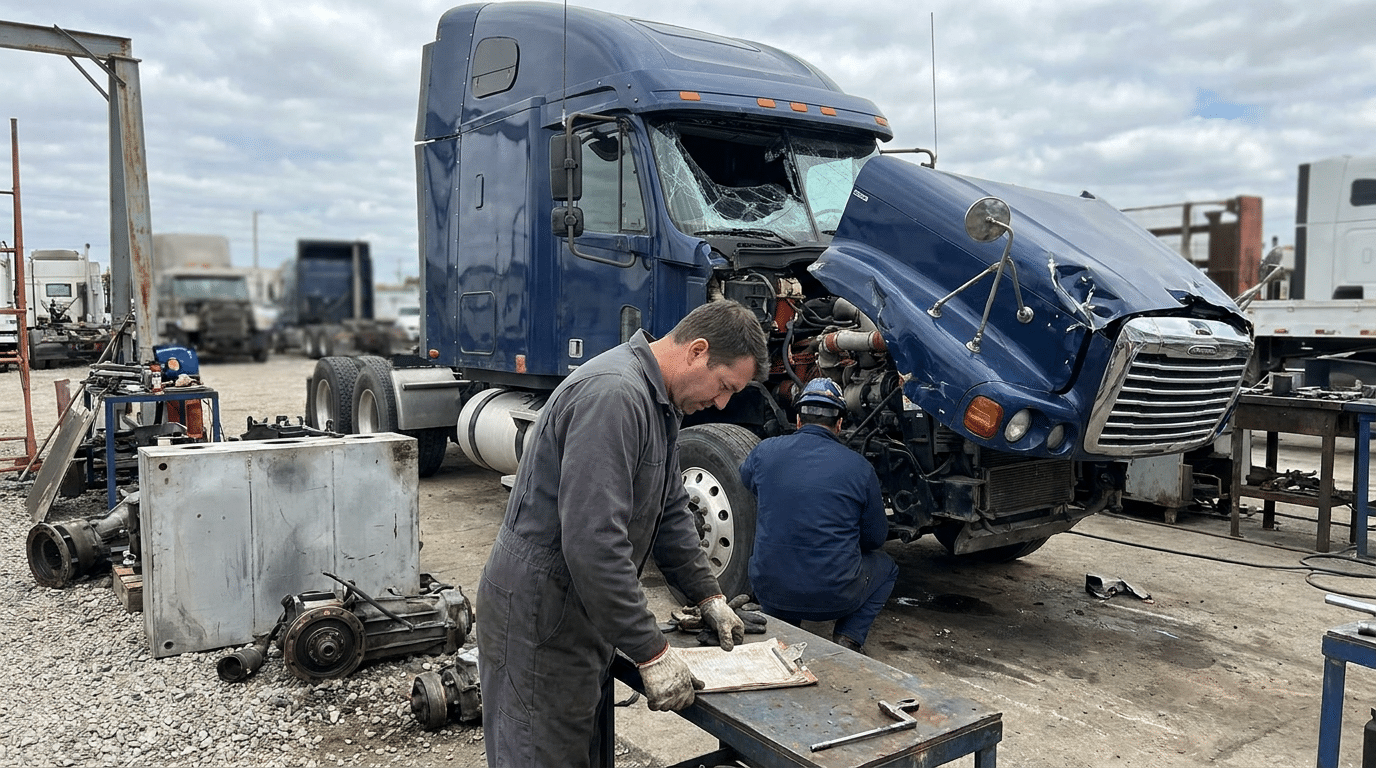
Repairing a totaled commercial truck often incurs costs far beyond the initial estimate, impacting both your budget and operational efficiency. What seems like a cost-saving measure can quickly become a financial sinkhole and prolong fleet downtime. Understanding these hidden expenses helps a fleet manager make a more informed decision.
Breaking Down Totaled Commercial Truck Repair Cost Categories
The totaled commercial truck repair cost typically includes structural repairs, engine and transmission work, and specialized component replacements. For instance, frame straightening on a heavy-duty truck can run tens of thousands of dollars. Engine repairs, particularly for a semi-truck, can easily exceed $10,000, and often much more for major components like a camshaft or crankshaft. This often puts the repair threshold far beyond the vehicle's depreciated value.
Beyond parts and labor, consider the cost of specialty diagnostic equipment, skilled technicians, and the time the truck spends off the road. The most expensive repair on a semi-truck is often an engine overhaul or transmission replacement. These complex jobs can cost between $20,000 and $40,000, depending on the engine type and the extent of damage. Such significant investments rarely make financial sense for a vehicle already deemed a total loss.
Unexpected Expenses and Diminished Value After Repair
Even after extensive repairs, a "totaled" commercial truck seldom returns to its pre-accident condition. You face unexpected expenses like rental truck fees during extended repair times, additional inspections, and potential secondary repairs as new issues surface. Repairing a vehicle that was technically a total loss can also lead to a significant loss of value, affecting resale prices and future insurance premiums. For example, a vehicle with a prior total-loss history often has a resale value 20-30% lower than that of an equivalent vehicle with a clean title. This reduced value directly impacts your fleet's asset base.
Fleet managers tell us they value speed and ease. As Dave Alger noted in his review, "This is the one you want - it's a local shop and will move as quickly as possible to coordinate a tow truck and get that car out of your life at a fair price." This sentiment is even more relevant for commercial trucks, where every day off the road costs your business. Choosing to sell rather than repair avoids these unforeseen financial drains and gets you cash quickly.
Is It Better to Fix or Total an Older Commercial Truck?
For an older commercial truck, it is almost always better to total it rather than attempt extensive repairs. The high costs of commercial truck repairs for significant damage, combined with routine maintenance needs, rarely justify the investment. An older truck already has a lower ACV, so major repairs quickly exceed this threshold. Investing $15,000 in a truck that was only worth $10,000 before the accident is a poor business decision.
Consider the average lifespan and depreciation curves of commercial vehicles. A ten-year-old semi-truck with 700,000 miles likely has many components nearing the end of their service life. Repairing accident damage on such a vehicle usually means addressing one problem while others are imminent. Selling a rusted commercial truck for cash, rather than sinking money into endless repairs, provides immediate capital and frees up resources. This aligns with our mission to offer a "fast & easy way" to liquidate assets, providing "cash on the spot" and towing.
Exploring the Option of Selling Your Totaled Commercial Truck
Selling a totaled commercial truck offers a straightforward solution, providing immediate cash and eliminating the headaches of extensive, often uneconomical repairs. This option allows fleet managers to quickly recover value from a damaged asset and reallocate resources efficiently.
Pro Tip: Even if you consider your truck an unsalvageable heap, we often find value in its components. Engines, transmissions, and even specific body parts can be valuable for salvage, meaning more cash for you.
Benefits of Selling a Totaled Commercial Truck
Selling your totaled commercial truck offers several clear benefits. First, you get instant cash, avoiding the unpredictable financial burden of repairs. This capital can then be used to invest in a replacement vehicle or other fleet improvements, directly impacting cash flow. Our process ensures "cash on the spot," which is critical for managing unexpected expenses.
Second, you free up valuable space in your yard or garage. A non-operational truck takes up real estate and can even become a liability. Lastly, you bypass the logistical nightmare of sourcing parts, managing repair timelines, and dealing with diminished value post-repair. As Veronica Luna shared, "Great experience! Easy to get a quote, very willing to help me understand the process, and also very punctual and professional! We extend the same professional, hassle-free service to commercial fleet owners.
How Our Wrecked and Totaled Truck Buying Service Works
Our service for buying wrecked and totaled trucks is designed for simplicity and speed. We understand fleet managers deal with complex logistics, so we streamline the disposal process into three easy steps:
- Get an Offer: Contact us with details about your totaled commercial truck. We provide a swift, transparent quote based on its make, model, damage, and salvageable parts. This service is available for wrecked cars and extends to commercial vehicles.
- Get it Removed: Once you accept our offer, we arrange for a vehicle removal and towing from your location, anywhere in our service area. You won't pay a dime for transportation, saving you time and money.
- Get Paid CA$H on the Spot: When our team picks up your totaled truck, we pay you cash right then. No waiting for checks to clear, no financial uncertainty. We provide "top dollar" for your damaged asset, ensuring a quick and equitable transaction.
This "hassle-free" approach ensures you recover value quickly, without the complexities usually associated with disposing of heavily damaged fleet vehicles. We buy "any condition," making it a reliable solution for your totaled assets.
Making the Right Decision: Repair vs. Sell Analysis for Fleet Managers
For fleet managers, the decision to repair or sell a totaled commercial truck demands a rigorous analysis of costs, operational impact, and future value. This isn't just about the immediate price tag; it's about the long-term health of your fleet and bottom line. We provide the tools to make an informed choice.
Key Factors for Your Totaled Commercial Truck Repair Cost vs. Sell Evaluation
When weighing the totaled commercial truck repair cost against selling, consider these critical factors. First, evaluate the extent of structural damage; extensive frame issues usually tip the scales toward selling. Second, assess the availability and cost of specialized parts; proprietary components for brands such as Ford Motor Company or General Motors can be expensive and significantly delay repairs. Third, factor in downtime: how long will the repair take, and what is the cost of having that truck out of service? A downed truck can cost thousands per day in lost revenue and missed opportunities.
Don't forget the truck's age and mileage. For older trucks, the cost-effectiveness of repairs diminishes rapidly. Finally, consider the potential diminished value after repair: a repaired total loss will always carry that history, which will impact its resale price. Many fleet managers find that liquidating quickly is the most strategic move. Our service simplifies this, offering "cash on the spot" and towing, as Courtney Borg noted, "I couldn't believe how easy and friendly" the process was for her.
using a Cost-Benefit Analysis for Fleet Vehicle Disposal
A thorough cost-benefit analysis is essential for discerning the best path for your totaled commercial truck. Calculate the total estimated repair cost, including hidden fees like rental vehicles, administrative time, and potential legal fees if there's a dispute. Contrast this with the immediate cash offer you receive from selling the truck.
Factor in the indirect costs of repair: the loss of operational capacity, potential service delays, and the administrative burden on your team. Then compare these against the benefits of selling: immediate cash, freed-up space, and the ability to quickly invest in a reliable replacement. For example, replacing a damaged older model with a new, fuel-efficient truck could yield sustained operational savings that far outweigh the cost of repair. This proactive management strategy can significantly impact your fleet's overall profitability, which is why we simplify the process of selling your "totaled car."
Maximize Your Fleet's Value, Sell Today!
Don't let a totaled truck drain your resources. Get a fair offer, removal, and immediate cash. Reinvest in your active fleet now.
Insurance, Legal, and Operational Considerations
Navigating the aftermath of a totaled commercial truck involves more than just repair estimates; it includes complex insurance claims, legal implications of salvage titles, and operational continuity for your fleet. Understanding these factors is critical for fleet managers to make sound decisions and avoid future liabilities.
Navigating Insurance Claims for Totaled Commercial Vehicles
Filing an insurance claim for a totaled commercial vehicle is a detailed process that directly impacts your choices. Your insurer will assess the damage to determine the Actual Cash Value (ACV) and declare it a total loss if repair costs exceed a certain percentage of that value. Understanding your policy's specifics, including deductible limits and coverage for rental replacement vehicles, is essential. For example, some commercial policies may offer limited "loss of use" coverage, but it often falls short of covering extensive downtime.
Be prepared to negotiate the ACV if you believe their initial offer is too low. Gather documentation of all upgrades, maintenance, and similar truck sales in your market. It is also important to consider if the accident was related to Occupational Safety and Health Administration (OSHA) standards or other regulatory compliance issues, which can add layers of complexity. While insurers handle much of the payout, they typically won't manage the physical removal or disposal of the totaled vehicle if you retain the salvage. Our service fills this gap, offering "vehicle removal & towing" and emphasizing "your confidence is our priority."
Understanding Salvage Titles and Their Implications
If your commercial truck is declared a total loss and you decide to keep it (or your insurer assigns it to you through the payout process), it will be issued a salvage title. A salvage title indicates that the vehicle has been extensively damaged and deemed uneconomical to repair by an insurance company. This has significant implications.
Firstly, registering a salvage-titled commercial truck for road use requires extensive repairs, inspections, and often a "rebuilt" title, a costly and time-consuming process. Many states have stringent requirements for vehicle emissions standards and safety checks before a rebuilt title is issued. Secondly, a salvage title drastically reduces the truck's resale value, making it difficult to sell or insure in the future. Lenders are often unwilling to finance vehicles with salvage or rebuilt titles. For these reasons, selling a totaled commercial truck to a reputable buyer like Junk Car Cash Out is often the most pragmatic solution, allowing you to avoid the complexities and liabilities associated with salvage titles.
Clear Your Yard, Clear Your Mind!
Got an old commercial truck taking up space? Get quick cash, towing, and environmental peace of mind with our easy service.